GOAL: 5 Essential Services for All
What’s Our Destination?
This site, the book collection, and the YouTube channel Dr. Dom vs. Bad Billionaires all serve one goal: supporting collectives in each city to organize around making five essential services affordable and accessible for everyone. Those five essentials are housing, healthcare, healthy food, transportation, and childcare—all within reach, all supported by city policy, with county and state policy close behind.
Where’s Our Social Contract?
This is what we mean by a social contract: an agreement that local and state governments will ensure people have the services they need for a decent life. The YouTube channel Dr. Dom vs. Bad Billionaires breaks down how we got here and what it takes to win these services back.

Housing: Affordable for All
Every city already has the resources it needs to fund affordable housing for all its residents. What’s missing is a mayor who’s all‑in on affordability—and a public that’s awake, organized, and ready to back them. Today, skyrocketing housing prices have turned home buying into a privilege mainly reserved for the wealthy, leaving the middle and working classes increasingly locked out.
Housing is more than a roof; it’s the foundation for all other aspects of life. A safe, stable home fuels health, achievement, and civic participation. But in America, housing has been turned into a market commodity—an investment vehicle for corporations, private equity firms, and landlords seeking ever-higher profits. Zoning laws, restricted supply, speculative markets, and corporate lobbying have driven prices beyond reach for millions, resulting in record rents and surging homelessness. Rent control is unheard of in many localities.
For many, homeownership feels out of reach, while renting—with the constant threat of rent hikes—often leaves little for other essentials. The fight over affordability is no accident; it’s the product of deliberate policy choices and powerful interests profiting from manufactured scarcity.
Billionaires make affordable housing nearly impossible, not because luxury homes are enough for them, but because treating housing as a commodity—rather than a human right—maximizes their profits.
When affordable housing is treated as policy, part of the 5 Essentials Platform on the federal, state, and local levels, not just a commodity, society invests in everyone’s dignity and future potential. Each city can look to the strategies being implemented by pro-affordability mayors in NYC and Seattle to see how affordable housing for all can become a reality.

Healthcare: A Right, Not a Privilege
Every city already has the resources to make healthcare affordable and accessible for everyone who lives there—we’ve just chosen not to use them that way. We can learn from cities around the world that have done exactly this, proving it’s a question of priorities, not possibility. What we’re missing is a mayor who actually puts affordability first—and a community that’s organized enough to demand it. Healthcare should guarantee that everyone can get care, regardless of ability to pay. Yet Americans pay the highest prices in the world for doctor visits, prescriptions, and insurance premiums—thanks largely to entrenched corporate interests.
Pharmaceutical companies, health insurers, and provider networks fiercely lobby against reforms that could lower costs, all while raking in record profits. Even basic care feels out of reach for many young people, with coverage tied to employment or riddled with gaps.
Multi-million dollar marketing campaigns and industry influence in Washington have kept costs high and universal coverage elusive. The rationale is simple: the status quo is enormously lucrative. Real change starts with reasserting healthcare as a collective right within the 5 Essentials Platform every candidate for office needs to commit to, not a privilege for the wealthy or well-connected.
A quick online search reveals just how many countries offer universal health care for every resident—including elders with their unique needs. The U.S. is nowhere close to making it onto this list.
The oligarchy has done an incredible job with mass hypnosis, convincing much of the nation that Medicare-for-All is bad while insurance companies are good, despite overwhelming evidence to the contrary. Pro-affordability mayors and governors are key to to each state inventing a system of healthcare for all.

Food: Nourishing Bodies, Minds, and Communities
Every city has the ability to make healthy food affordable and easy to get in every neighborhood—we’ve just chosen other priorities. We can learn from cities around the world that have already done this, treating nutritious food as a public good instead of a luxury. What we need now is local leadership that puts food affordability first—and a community organized enough to insist on it. Food insecurity remains widespread, even as agribusiness giants and grocery chains profit handsomely. Food deserts, price gouging, and rising costs for basics like bread and produce have turned healthy eating into a luxury in many communities. Corporate consolidation in agriculture and grocery retail puts pricing power in the hands of a few, while lobbying efforts often block local and policy solutions for affordability and access.
For many twenty-somethings, those making near minimum wage and elders on a fixed income, the struggle is not knowing what healthy food looks like—it’s being able to afford it and access it near home. Bringing food prices within reach means confronting concentrated power and prioritizing community health over corporate margins. Why do food deserts persist in rural and urban America, denying families and children access to affordable, healthy food? This is no accident—it’s a project shaped by billionaire interests, some might even say a sign of sociopathic priorities. Recent policy debates, like those from the New York City mayoral race, have shown that the most promising solution—city-subsidized grocery stores to keep prices low and quality high—faces fierce pushback from billionaire-owned grocery chains intent on protecting their profits. Everyone is one pro-affordable mayor away from having a local plan to ensure affordable food for all city residents.

Transportation: Access to Work, Learning, and Society
Every city can build affordable, reliable public transportation that actually gets people where they need to go—car‑centric cities are a relic, not a destiny. Cities around the world have already proven that when you invest in transit, people’s lives get easier, cleaner, and cheaper. What we need now is leadership willing to put transit at the center of city planning—and residents organized enough to demand buses, trains, and shuttles that work for everyone, not just more lanes for cars. In civilized countries, efficient, affordable transportation links people to jobs, schools, healthcare, and opportunity. Yet, much of the U.S. is designed for car-centric living—leaving those without a vehicle stranded or dependent on expensive, unreliable options. Private corporations and auto industry lobbies steer policy toward highways and cars, rather than funding public transit or walkable communities. Rising fares, limited routes, and underinvestment hurt low-income and young Americans most.
Transportation costs are a major barrier to upward mobility, making basic participation in society more difficult. Ensuring everyone can get where they need to go isn’t just about convenience—it’s a matter of economic and social justice.
Looking to the NYC mayoral campaign, we see a detailed plan—with clear funding formulas—to provide fast, fare-free buses citywide. That’s an impressive start and a model for every city to build on. A quick search on YouTube will supply hours of binge-watching pleasure, showcasing amazing transportation solutions from around the world. But don’t expect to find those innovations in the U.S.—at least not until the 5 Essentials Platform is truly implemented and prioritized, guided by a pro-affordability mayor and activist public.

Childcare: Investing in the Next Generation
Why do oligarchs—and the elected officials they support—fight against universal child care? Some may want to protect profit from for-profit child care and early learning businesses. Others may wish to keep the primary caregiver—usually a woman—at home and out of the job market, reinforcing old gender roles. The opposition is baffling; while the precise motivations vary, it likely boils down to a mix of profit motives, sexism, and resistance to public investment in social goods.
Childcare is essential for working families and for the development of young minds. Still, the U.S. treats it as a personal problem, not a shared responsibility. Corporate daycare chains, insufficient public funding, and lack of workplace supports push childcare costs sky-high, often eclipsing rent or tuition for young parents.
Meanwhile, those who provide care are routinely underpaid and undervalued. Powerful interests resist subsidizing or universalizing childcare, worried about regulation and labor costs. But affordable, high-quality care pays society back many times over through better childhood outcomes, stronger families, and a more inclusive economy. Making it a collective priority is key to a thriving, equitable future.
If we look to the NYC mayor’s race, Zohran Mamdani has outlined a policy and funding formula for universal child care in his city. If NYC succeeds, no other city will have an excuse not to follow suit. New Mexico is the first state with a governor announcing its plan for universal child care. We don’t lack for research, potential funding streams or need, just a pro-affordability mayor and pro-affordability governor to make it happen.

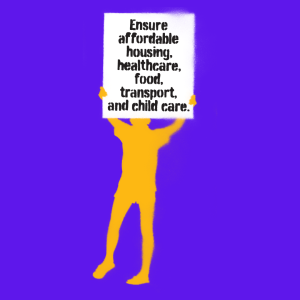

Let the 5 Essentials Platform book collection guide and strengthen the Affordability Movement. Take the first step toward making housing, healthcare, and childcare more affordable. Every action counts in reshaping our cities.